Standing Together - Restoring Hope
Poverty remains a problem for our community. 25% of the population is considered impoverished, and we are witnessing an increase in homelessness.
Homelessness has now become an unavoidable challenge for all of us, increasing public health and economic development problems.
Despite our community’s efforts to serve individuals in need, we must expand those efforts to address the needs of the wider community by Standing Together and Restoring Hope.
Standing Together – Restoring Hope represents:
A vision for the future where Augusta’s social service agencies and their many volunteers and partners are working in unity to create solutions for people affected by a housing crisis.
An opportunity for donors to support a new shelter and to expand our community-of-care to provide more effective service to those in need.
Our communities of faith and our readiness to receive God’s guidance and blessings.
A new generation of community leaders committed to establishing pathways for those in crisis to reclaim their lives.
Acknowledgement that eliminating barriers and sustaining trust relationships allows those in need to heal, recover, and lay the foundation to create a better future.
Our shared goal of creating Augusta’s new Center of Hope that serves more people in need, more effectively and with greater lasting effect
The Campaign for Augusta’s New Center of Hope
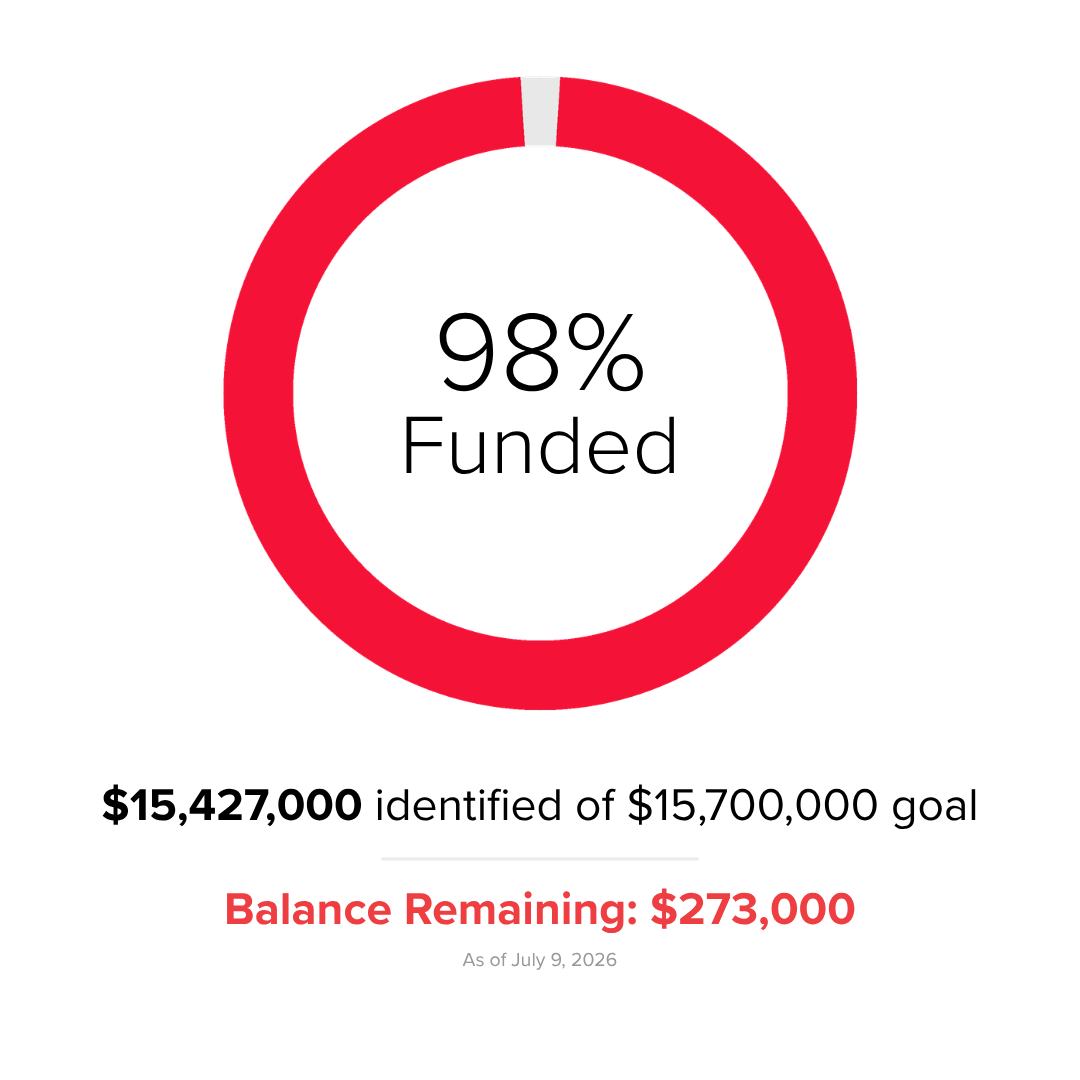
The Salvation Army’s Augusta Area Command is embarking on a capital fundraising campaign to raise $10.9 million in private support toward a $15.7 million project to relocate and build a new purpose-designed Emergency Shelter. This campaign will also encourage a new generation of leaders and donors to stand together with those who are working today to serve our communities’ needs
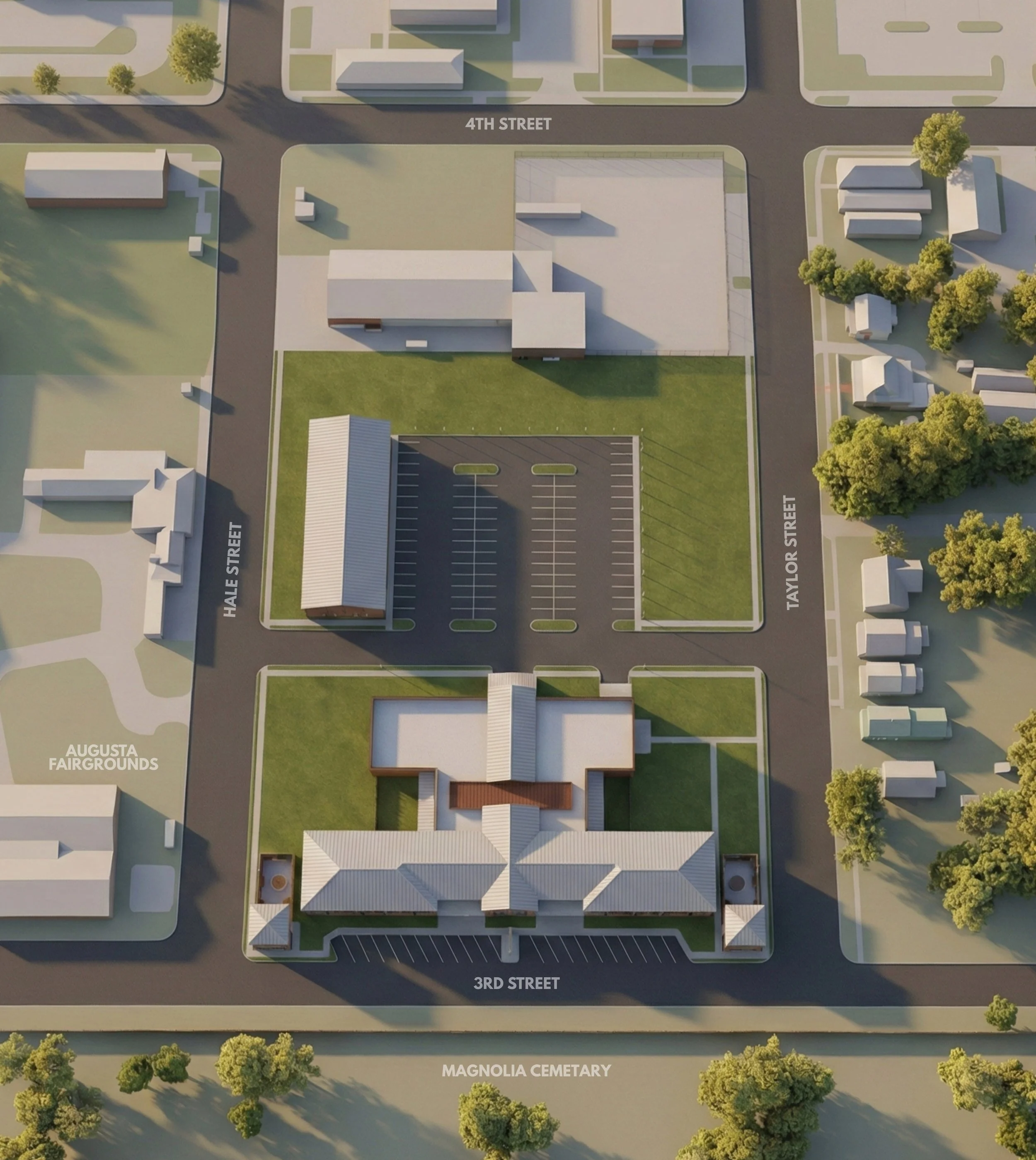
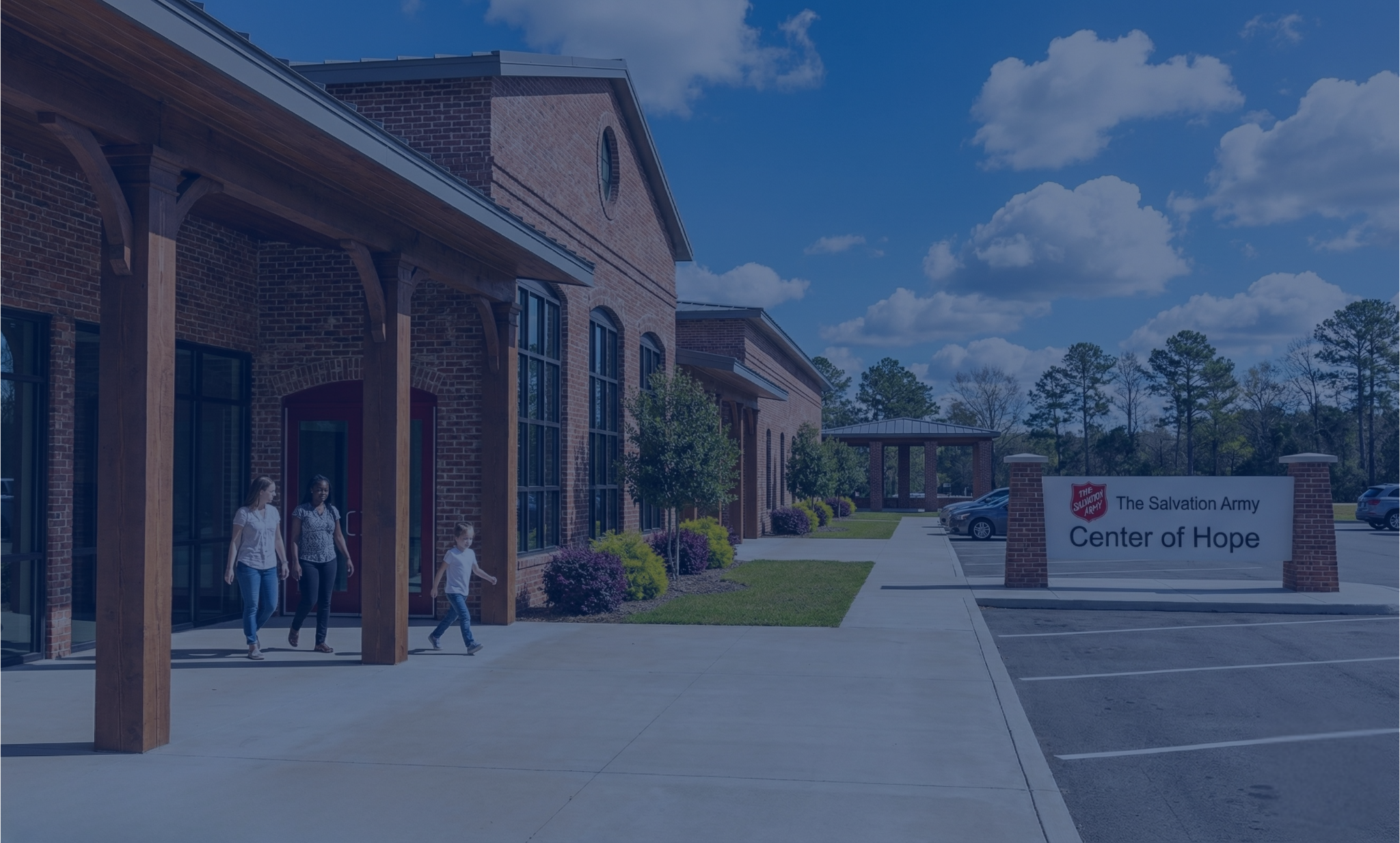
A purpose-built Center of Hope is clean, well-lit, and designed to restore dignity to everyone who enters.
The new facility will nearly double current capacity, housing up to 200 individuals, while allowing access to safer, more effective care for every guest.
Designed with intention, the shelter will:
Provide separate entrances and reception areas for families with children and for women, distinct from those serving men.
Private spaces for case management, counseling, and social services.
The ability to separate guests when needed to reduce disruption and promote safety.
Three separate functional living environments, including 12 non-congregate rooms to keep families together.
What does a purpose-built shelter look like?
Guests will have access to essential resources that support stability and independence, including:
Clean, accessible bathrooms and showers
Laundry facilities
Computers and internet access
The ability to receive mail — often required for employment, benefits, and housing
Most importantly, this purpose-built shelter creates consistency. Guests can be assured a safe place to sleep, allowing them to build trust with caseworkers, maintain employment, and take meaningful steps toward permanent housing.
This is more than a building — it’s a space designed to help people regain stability, self-esteem, and hope.
The Center of Hope is the area’s only emergency overnight shelter and the largest and only shelter serving homeless families with children.
What is an Emergency Overnight Shelter?
Emergency overnight shelters (EOS) are intended to provide an immediate respite to families with children and individuals finding themselves in an unexpected separation from stable housing. Once admitted, staff will make an initial assessment of shelter clients to determine the circumstances of their emergency and the nature of assistance required.
Emergency shelters are intended to be the beginning point for recovery, so that individuals may find a new direction and a pathway back to self-sufficiency.
A Growing Population of Unserved
One method of quantifying our local homeless population is the federally mandated point-in-time counts. In 2024, Augusta area leaders identified 474 homeless persons during the point-in-time count. In early 2025, this annual count increased to 1,098 persons. On average, between 69 and 75 percent of homeless individuals in the Augusta area are unsheltered and living on the streets. More people are living on the streets than in our homeless shelters.
The Face of Homelessness
When asked to think about the homeless, most people imagine a chronically homeless person panhandling for money to buy alcohol or drugs and demonstrating little interest in their future. Based on the most recent data, on any given night, roughly 24% of the total U.S. homeless population is chronically homeless. Here in Augusta, that number has remained below 14% in each of the past four annual point-in-time counts, and just 5% in 2025.
The Salvation Army serves those that have a demonstrated interest in transitioning to stable housing through commitment to casework, appointments, and leveraging resources to help themselves. This is different than the chronically homeless- these are people affected by job loss or unexpected change in circumstances that leave them in fear, chaos and turmoil. Nearly 70% of homeless women have experienced physical abuse, 40% have survived sexual violence and almost half are employed in some capcacity.
Would you be reluctant to use a shelter?
It is difficult for most people to imagine the reality of homelessness. Entering a homeless shelter can be a scary proposition, especially for those suffering from a history of trauma. Most are seeking safety and independence. Some try to distance themselves from large groups where illnesses may be present.
The sad reality about homeless women is that many are victims of physical abuse (70 percent) or sexual violence (41 percent). So, it’s not surprising that homeless women, including those with small children, might feel uncomfortable staying in such close proximity to homeless men.
This is why the new Center of Hope is so important: reducing barriers to entry and reluctance to use a shelter by having clearly defined, separate entrances and living spaces for men, women, and families with children.